Mon to  Sat 11:00 am to 8:00 pm

What is Hernia? And how is it treated?

Hernia is the protrusion of the abdominal contents outside the abdominal cavity. These abdominal contents push through a weak area or a tear in the abdominal wall. The bulge of hernia is evident in some positions such as during heavy weight lifting, coughing and laughing etc. 

It is more common in obese people, senior adults and weigh-lifters males. Laparoscopic hernia repair surgery is the best method to treat all types of hernias. The hernia patients recover faster and there are smaller incisions as compared to the open surgery. Dr. Sumeet Shah is the best hernia repair surgeon in Delhi with flawless results and faster patient recovery.

Laparoscopy Surgeries may seem simple, but need a lot of Experience and Dexterity

Dr Sumeet Shah has extensively trained and accomplished Laparoscopic & Bariatric Surgeon, he has been attached to some of the leading hospitals of Delhi. Dr Shah has been practicing Surgery for more than 20 years and has several thousand successful operations and satisfied patients to his credit.

Dr Shah has several presentations to his credit and has been invited as Faculty/ Expert at more than 100 National/ International meetings of Laparoscopic and Bariatric Surgeons.He has presented more than 50 invited papers at various specialist meetings. 

He is passionate to build trust and to provide highest standards of medical excellence, scientific knowledge and patient care.

Graduation (M.B.B.S) – Maulana Azad Medical College, New Delhi – 1993
Post graduate (M.S) in General Surgery – 1997
Diplomat of National Board (DNB) in General Surgery – National Board of Examination, Delhi.
Advanced training in Gastro-Intestinal Surgery – AIIMS, New Delhi
Post Doctoral Fellowship in Minimal Access Surgery and has received special training in Metabolic & Bariatric Surgery.
Fellowship – Indian Association of Gastro Intestinal Endosurgeons (FIAGES)
Advanced Laparoscopy Fellowship (FALS) in Metabolic / Bariatric and Hernia Surgery

0
Inguinal Hernias Treated
0
Ventral Hernias Treated
0
Hiatus Hernia Treated
0
Diaphragmatic Hernia Treated

What are the different types of Hernias & their treatment?

Types of Hernia 


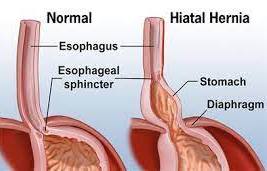
  • Hiatus Hernia – When a part of the stomach pushes up in the breathing muscle (diaphragm), it is known as a hiatal hernia. The diaphragm is a muscle for breathing, and the place through which the part of the stomach pushes on it is known as hiatus. Patients face indigestion, heartburn, and abdominal pain in most cases. Treatment of the hiatal hernia needs medications and sometimes surgery as well. Hiatus hernia is often associated with a condition called GERD – Gastr Esophageal Reflux Disease, in which the acid of stomach enters the food pipe causing symptoms like heartburn and damage to the internal lining of lower end of food pipe.  hiatus hernia
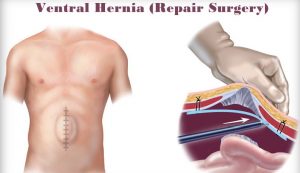
  • Ventral Hernia – When the contents of the stomach push out of the abdominal wall right in front, it is known as ventral hernia. These contents push out from the hole in the abdominal wall. It can be of three types, Epigastric hernia (chest to the belly button), Umbilical hernia (contents push out through belly button) and Incisional hernia (contents comes out from a previous surgery site). These hernias also need laparoscopic repair to push them inside and prevent any complications. The repair involves closing of the hole/ defect through which abdominal contents are bulging out and placing a ‘Mesh’ to reinforce the repair. ventral hernia treatment
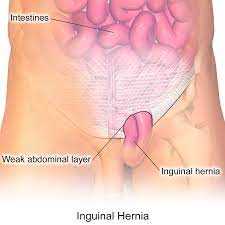
  • Inguinal Hernia – This is the most common type of hernia present predominantly in males. The bulge is present in the groin area in the lower abdominal wall. However, it may present in the ladies also and in pediatric age group. Open repair can be done using a mesh under local anesthesia. However, Laparoscopic repair is the best treatment in most cases. In Laparoscopic Repair a large piece of mesh is placed below the muscle. It has less pain and less chances of re-occurrence.inguinal hernia
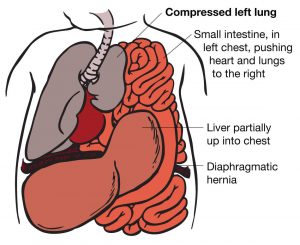
  • Diaphragmatic Hernia – This type of hernia is present in babies by birth. There is a hole in the breathing muscle called the diaphragm. The contents of the abdomen are pushed up in the chest through that hole. Diaphragmatic hernia can cause breathing difficulties in baby as the lungs are not able to expand fully. diaphragmatic hernia treatment
Best Hernia Repair Treatment in Delhi 


Laparoscopic surgery is the best treatment for hernia repair due to small incisions, least blood loss and faster recovery. In the Laparoscopic Surgery a camera is attached to a laparoscope that is inserted into the body through a small incision. Other surgical instruments are inserted through another 2 or 3 small incisions. That’s why it is known as keyhole surgery as the treatment is performed with this minimal invasive approach. The herniated content is pushed back and a mesh may or may not be applied on it to give some reinforcement to the abdominal wall. In majority of the situations Mesh is used to reduce chances of re-occurrence. This surgery takes less time, leads to less blood loss, smaller incisions, cosmetically better scar and provides faster recovery. This is why it is the best hernia treatment worldwide. 

FAQs about Hernia Surgery

  • Excessive strain on the stomach such as while passing bowel movements
  • Obesity 
  • Old age
  • Lifting something heavy
  • Excessive vomiting
  • One of the most experienced general surgeons in Delhi
  • You will have no to minimal scar as the incisions are closed by surgical glue and not the stitches in most cases.
  • You will be up and about within a week after surgery.

Some of the most common symptoms of a hernia are – 


  1. Feeling of something coming out of abdomen
  2. Presence of a lump near the groin or naval area depending upon the type of hernia
  3. The bulge may pop out more while lifting weights and will go inside while lying down
  4. The abdominal wall feels weak or giving way while coughing, laughing, lifting heavy weights, or any position that puts pressure on the abdominal wall, etc.
  5. Dull aching pain in the lower abdomen (may not always be there) 
  6. Nausea
  7. Constipation 

The hernia is diagnosed by palpating the area or by physical examination. After that, some imaging studies such as CT scans, MRIs,s, and Ultrasound are required to confirm the diagnosis and decide the best option of treatment.

  • Follow a healthy lifestyle 
  • Don’t lift anything heavy or do any heavy sports until you are cleared to do so. 
  • Don’t skip your follow-up visits. 
  • Alcohol and smoking tobacco must be avoided before and after the surgery
  • A healthy weight needs to be maintained as well. 
Call Now Button